Meetings, incentives, conferences, and exhibitions move people, ideas, and revenue. They also move a lot of carbon. Industry estimates suggest the global events sector contributes as much as 10% of worldwide greenhouse gas emissions, and the average conference attendee can generate roughly 176 kg of CO₂e per day, once you count travel, accommodation, food, and waste.
That footprint is no longer a background concern. It shows up in procurement policies, in attendee expectations, and increasingly in the contracts you sign. Recent industry research points to a sharp rise in planners who now treat environmental performance as a baseline requirement rather than a bonus, with sustainability language appearing in a fast-growing share of RFPs.
Here's the part that gets missed. Sustainability in the MICE industry isn't a separate track that competes with a great attendee experience or a healthy budget. Done well, it sharpens both. Reusable signage costs less over time. Digital check-in speeds up arrivals. Local, plant-forward menus taste better and travel shorter distances. The goal of this guide is practical, not preachy: ten steps you can actually run, in the order that gives you the biggest return on effort.
Start with the venue and destination

Your venue decision sets the ceiling for how sustainable the rest of the event can be. A property that already runs on renewable energy, diverts waste, tracks water use, and holds a recognized certification does a large share of the work for you. One that doesn't will fight you at every turn.
Ask direct questions during sourcing. Does the venue measure and report its energy and waste? Can it share consumption data after the event? Does it hold a credential like ISO 20121, LEED, or a recognized green-key style certification? Smart venues answer quickly because they've been asked before.
Destination matters just as much as the building. A city with good public transit, walkable hotel clusters, and an airport that most attendees can reach without connecting flights quietly cuts your largest emissions source before anyone books a room. When you compare shortlists, weigh accessibility and infrastructure alongside price and capacity, because the "cheaper" destination that forces long-haul travel for most guests often carries the higher carbon bill.
Venue Directory lets you filter and compare event venues, request proposals, and surface sustainability details across a large network of venues in one place, so green criteria sit right next to rate and space in your decision.
Attack travel emissions first
If you only fix one thing, fix travel. For most meetings and events, attendee travel and the wider supply chain drive the majority of the carbon footprint, often in the range of 70% to 90% of total emissions. Recycling bins matter, but they don't move that number. Where and how people get to your event does.
Choose central locations that reduce the average distance traveled. When a large share of your audience clusters in one region, host there rather than defaulting to a marquee city that everyone has to fly into. Arrange shared transport between airports, hotels, and the venue so guests aren't taking individual rides. Publish transit directions and encourage rail over short-haul flights where the route makes it realistic.
Hybrid and virtual formats deserve an honest look here, not a blanket endorsement. Letting a remote audience join sessions can remove thousands of travel miles, which is a real win. Just remember that streaming, servers, and production carry their own footprint, so hybrid reduces impact rather than erasing it. Use it where travel would be heavy and the in-person value for that segment is low, and keep the flagship, relationship-building moments in the room.
Go digital wherever paper used to be

Print is the easiest waste to design away, and attendees rarely miss it. Move registration, agendas, maps, and session materials into a mobile event app. Replace printed badges and paper handouts with digital check-in and on-demand content. Swap the printed program for a live schedule people can search on their phones.
The savings are real on both sides of the ledger. Industry estimates put the reduction in consumable spend from digital-first materials and reusable assets at up to 25%, and you skip the last-minute reprints when a session time changes.
Signage is where teams often backslide. Instead of dated, event-specific banners you toss afterward, design modular signage you can reuse across your calendar, and use digital screens for anything that changes by the hour. A well-built app plus a set of reusable signs handles almost everything a stack of printouts used to.
Rethink food and beverage from the menu up
Catering is one of the most visible and most wasteful parts of any event, and food loss is a serious climate factor in its own right, tied to a significant share of global emissions. It's also one of the easiest places to make changes attendees actually enjoy.
Build menus around local and seasonal ingredients to cut the distance your food travels and support nearby suppliers. Lean plant-forward, since plant-based dishes generally carry a lower footprint than heavy meat service, and today's menus can do this without anyone feeling shortchanged. Plan portions against confirmed headcounts rather than optimistic guesses, and use registration data to forecast dietary needs so you prepare closer to what people will eat.
Then plan for what's left. Arrange in advance to donate safe surplus food to a local organization, and set up composting for the scraps that can't be donated. Skip bottled water in favor of refill stations and pitchers. Choose reusable or genuinely compostable serviceware over single-use plastic. Small menu decisions, repeated across a multi-day program with thousands of covers, add up fast.
Design out waste before the event starts
The cheapest waste to manage is the waste you never create. Treat waste reduction as a design decision you make during planning, not a cleanup problem you inherit on-site.
Start by cutting single-use items across the board: giveaways nobody keeps, packaging that goes straight to the bin, disposable cups and cutlery. For everything that remains, set up clearly labeled recycling and composting stations with enough signage that guests can sort correctly without thinking hard. Confusing bins are why so much recyclable material ends up in landfill.
Work with the venue and your suppliers on back-of-house waste too, since a lot of it never reaches the show floor. Ask how deliveries are packaged, whether pallets and crates get returned, and how the venue handles its own diversion. When you can, weigh and record what you divert, because a number you can report is a number you can improve next year.
Choose materials, booths, and swag that get a second life
Exhibitions and conferences generate a mountain of physical stuff, and most of it is built to be used once. Shift toward modular booth systems that pack down and travel to the next show, backdrops and stands you can rebrand rather than rebuild, and rented furniture over purchased pieces that end up in storage or a skip.
Rethink swag with the same lens. Branded items that get thrown away are money spent on future landfill. Fewer, better, useful gifts made from recycled or responsibly sourced materials earn more goodwill than a table of plastic trinkets. When you do produce collateral, choose recycled stock and specify that leftover materials get reclaimed rather than binned.
The through-line is simple: favor anything reusable, rentable, or recyclable over anything disposable. That one rule quietly reshapes dozens of procurement choices.
Watch energy and water like a line item
Energy and water are easy to ignore because the venue usually manages them, but they belong on your radar. Ask whether the property runs on renewable energy or offers a green tariff, and give preference to venues that already track and report consumption.
On-site, coordinate with the venue to right-size lighting and climate control to the actual schedule rather than running full systems in empty halls. Use energy-efficient AV and lighting where you control the spec. Skip decorative touches that waste power or water for no real attendee benefit. For water, refill stations and mindful restroom and catering setups reduce use without anyone noticing a downgrade.
The payoff shows up on the final bill. Planners who monitor and trim energy and water use routinely see lower utility and procurement costs, which is a straightforward case for treating sustainability as good financial sense.
Put sustainability in the RFP and pick partners who deliver
You can only run a sustainable meeting with partners who share the standard. So make it a written requirement, not a hopeful conversation. Add clear sustainability criteria to your RFPs and ask venues, caterers, AV teams, transport providers, and production partners to show what they do and how they measure it.
Ask for specifics. Certifications held, waste diversion rates, energy sourcing, food donation and composting practices, packaging policies. Vague "eco-friendly" claims should score lower than concrete, measurable commitments. When sustainability sits in the RFP with real weight, suppliers compete on it, and the whole event improves.
This is also where the industry is heading. As more planners formalize these requirements, partners who can't answer will lose business, and the ones who invested early will win it. Building the criteria into your sourcing now keeps you ahead of that shift.
Measure your footprint and set real targets
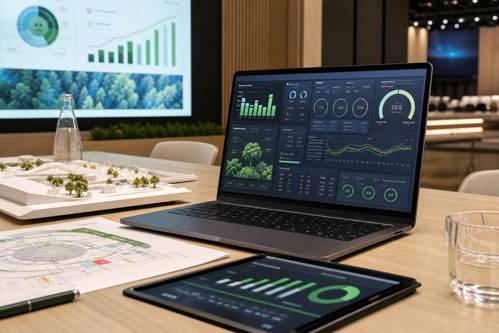
You can't manage what you don't measure, and you can't defend a sustainability claim you never quantified. Pick a few metrics that matter and track them event over event: estimated carbon footprint, waste diverted from landfill, food waste in kilograms, energy and water use, and the share of local or certified suppliers.
Set targets against a baseline rather than chasing a vague sense of "greener." A goal like cutting food waste by a specific percentage, or reaching a defined waste-diversion rate, gives your team something concrete to plan around and report on afterward. Pull the raw material from the systems you already use, since registration and travel data feed straight into travel-emission estimates, and venue reports supply energy and waste figures.
Measurement also protects you. It turns a marketing line into a documented result, which is exactly what corporate clients, boards, and sponsors increasingly want to see.
Align with a recognized standard and communicate honestly
At some point, good intentions need a framework. Aligning with a recognized standard moves you from a personal checklist to a credible, audited approach that others trust.
Three are worth knowing. ISO 20121 is the internationally recognized standard for event sustainability management systems, helping organizations manage the environmental, social, and economic impacts of events throughout their lifecycle. The Events Industry Council's Sustainable Event Standards, which evolved from the earlier APEX/ASTM standards, provide criteria for evaluating events and suppliers across areas such as procurement, materials, waste, and social responsibility. The Global Reporting Initiative (GRI) provides widely used standards for transparent sustainability reporting, helping organizations communicate their environmental, social, and economic impacts consistently and credibly.
Whatever you adopt, communicate with honesty. Attendees and corporate buyers are quick to spot greenwashing, and a stretched claim does more damage than saying nothing. Report what you measured, name what you're still working on, and let the numbers carry the message. Real progress, plainly stated, builds far more trust than a glossy claim you can't back up.
Final words
Sustainability in the MICE industry rewards the planners who treat it as part of the craft, not a compliance box. Start with the choices that move the most carbon, which usually means the venue, the destination, and travel. Then work through food, waste, materials, energy, suppliers, measurement, and standards until sustainability is simply how your events run.
The upside compounds. Lower costs on consumables and utilities. Stronger RFP responses and easier wins with sustainability-minded clients. Events people are proud to attend and proud to be associated with. Pick three steps from this list for your next event, measure the difference, and build from there. Expect more from your events and let the impact prove it.
FAQ
What does MICE stand for in the events industry?
MICE stands for Meetings, Incentives, Conferences, and Exhibitions. It describes the segment of business events that bring groups together for professional purposes, and it's one of the more resource-intensive parts of the wider events industry.
What is a sustainable event?
A sustainable event is one planned and run to reduce its environmental, social, and economic impact across its full lifecycle. In practice that means cutting emissions and waste, sourcing responsibly, measuring the footprint, and reporting the results honestly rather than making vague eco claims.
What is the biggest source of emissions at events?
For most meetings and events, attendee travel and the wider supply chain dominate the footprint, often in the range of 70% to 90% of total emissions. That's why reducing travel through location choice, shared transport, and selective hybrid formats delivers a bigger result than on-site recycling alone.
Does hosting a sustainable event cost more?
Not necessarily, and often the reverse. Digital materials, reusable signage, right-sized catering, and lower energy and water use reduce spend, with some estimates putting consumable savings at up to 25%. Certifications and premium sustainable suppliers can add cost, but many practical steps save money outright.
What sustainability certifications matter for events?
The most recognized are ISO 20121 for sustainable event management, the Events Industry Council's Sustainable Event Standards, and the Global Reporting Initiative's reporting guidance. Aligning with one gives your program credibility that a self-made checklist can't.